I Thought I Was Stupid For 30 Years
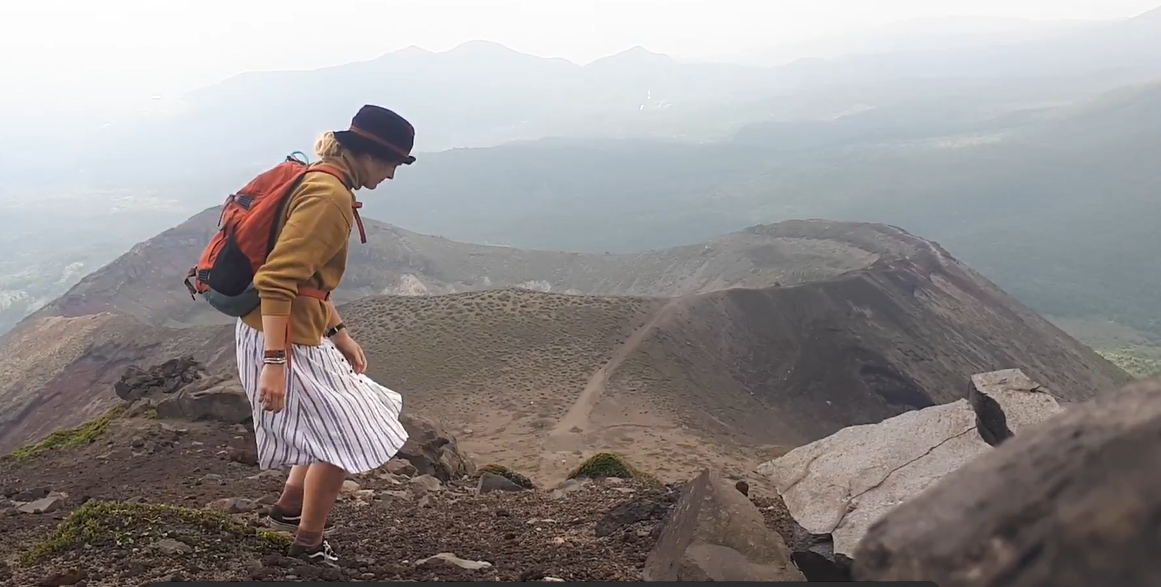
For most of my life, I genuinely believed I was stupid. Not "I sometimes felt stupid." Not "I lacked confidence." I believed it in exactly the same way I believed the grass was green or the sky was blue. It wasn't something I questioned. It was simply... true.
Or at least, that's what I thought.
When I look back now, I can see where that belief probably began. At primary school, I struggled. I remember sitting right at the front of the classroom because I couldn't keep my attention on what was happening. I also remember not being able to see the board very well, which was partially true.
Funny enough, when I was about five maybe six years old, I even convinced myself I couldn't see properly. I told my mum, she took me to see a specialist for an eye test, and I carried on the lie all the way through the appointment until the end. I realised at some point this was silly and instantly felt bad. Looking back now I laugh, luckily so does my mum, because I honestly have no idea why I did it.
I also remember being taken out of class to join a special group called ‘Fuzz Buzz’ because I was behind everyone else. I was later told I was dyslexic and used coloured reading overlays to help me.
Whether all of those things were right or wrong isn't really the point.
What mattered was how little Georgina understood them. I wasn't thinking, "I'm getting some extra help because I learn differently." I was thinking, "There must be something wrong with me." Children don't wake up one day and decide they're stupid.

They slowly come to believe it.
As I got older, I became quieter. I never put my hand up in class because I didn't want to get the answer wrong. I tried to stay under the radar as much as possible. Then something changed when I got to secondary school. The quiet little girl became the naughty teenager. I bunked lessons, shouted at teachers, smoked, and was far more interested in boys than algebra. Looking back now, I sometimes wonder if I'd already decided school wasn't for me. After all, if you already believe you're stupid...why would you bother trying?
Before I go any further, I want to say something that's really important to me.
This isn't an article about blaming my parents. I love my mum and dad dearly, and I genuinely believe they were doing the very best they could with the understanding they had at the time. If anything, learning about the mind has given me more compassion for them, not less. Because unless you spend years studying psychology or child development, how could you possibly know what a child's brain is doing with the experiences it's having?
Most parents are simply trying to raise a little human with the knowledge they've got.
The thing is, children don't experience the world in the same way adults do. Over the last few years, I've become fascinated by developmental psychology and psychotherapy. The more I learnt, the more my own life started making sense. One of the biggest things I discovered was that the first few years of our lives are incredibly important. Psychotherapists often describe these as our formative years. During this time, a child's brain is still developing the part of the brain thats responsible for reasoning, questioning and seeing another person's perspective.
If an adult says, "Don't be silly." A child doesn't usually think,"Maybe they're tired." Or, "Maybe they're having a stressful day."They think,
"I must be silly."
There's no mature prefrontal cortex, so a belief isn't something a child chooses. It's something the unconscious mind concludes in response to repeated experience. If parents are arguing, separating or emotionally unavailable, a young child doesn't understand mortgages, stress, relationship problems or childhood trauma.
Their little mind asks one simple question: "Is it me?" Most of the time, the answer becomes,"Yes." Not because it's true, but because that's how a young child's brain tries to make sense of the world.
It no longer feels like a thought. It feels like a fact.
That's what makes beliefs so powerful.
They're not necessarily true.
They're simply conclusions we reached before we were old enough to question them. Those conclusions don't only come from the words people say to us. They can come from what wasn't said.
The hug that never came.
The reassurance you needed but didn't receive.
Being compared to another child.
Being called "too sensitive", "the difficult one" or "the naughty one."
Or simply growing up around adults who were overwhelmed, anxious or emotionally unavailable.
None of these things automatically damage a child,but repeated over time, they can quietly become part of the story a child tells themselves about who they are. The difficult part is that those stories don't stay in childhood.
They come with us.
Mine certainly did.
For years, "I'm stupid" wasn't a belief.
It was a fact.
Or so I thought.
The Question That Broke My Brain
It wasn't until I was in my thirties that somebody finally challenged one of those beliefs.
His name was John, and he was my old boss. Honestly, what a legend, he reminded me of Ricky Gervais.
Who has a boss who can tell something's wrong before you've even started work, then gives you a quick therapy session instead of telling you to pull yourself together? I was incredibly lucky. Twice a week I sat in his workshops, and I can honestly say I wouldn't be the person I am today if it wasn't for him.
One day he asked me a question that completely shattered my reality.
"How do you know the grass is green?" I remember laughing. "Because... it is. "He smiled and simply asked again, "How do you know?"
At first I thought he'd completely lost the plot.
Then he explained something that completely changed the way I see the world.
When we say the grass is green, we're describing the world through our own perception. Someone who's colourblind experiences it differently. A dog experiences it differently. Someone from another culture may not even have the same word for that exact shade. We assume it's a fact because we've never questioned it.
That conversation wasn't really about grass.
It was about certainty.
Beliefs feel exactly like facts because we've lived with them for so long that we've stopped questioning them. I walked away from that conversation feeling like my whole world had come crashing down. If something as obvious as "the grass is green" could simply be my perception...
...what else had I never questioned?
Maybe I'm Not Stupid
That question followed me everywhere.
For weeks I kept coming back to one belief in particular. "I'm stupid." I'd believed it for over thirty years.
It had shaped the way I approached school, work, relationships and even opportunities. I avoided things I thought I'd fail at. I rarely gave myself the chance to discover what I was actually capable of because I'd already decided I knew the answer. Then I started looking at my life instead of the story I'd been telling myself.
Hang on...
I've travelled to places that once terrified me.
I've lived in countries where I knew nobody.
I've learnt massage, yoga, anatomy and philosophy.
I've taught classes.
I've raised money for children in Nepal.
I've built friendships with people from all over the world.
I've learnt from different cultures, different religions and different ways of living.
None of that sounded particularly stupid. Then I thought about something my grandad used to say. He never called me stupid. He always called me a traveller.
A globetrotter. God love him.
Maybe I'd spent thirty years collecting evidence for one story while completely ignoring the evidence for another. I'm not saying I suddenly woke up one morning believing I was the cleverest person in the room. Far from it. What changed was something much simpler.
I stopped treating one old belief like it was an unquestionable fact.

Then I thought about something else. After my trek in Nepal, I came home feeling incredibly proud of what I'd achieved. Not because I'd climbed a mountain, but because I'd pushed myself further than I ever thought I could.
A little while later, my nan sent me a card.
On the front was a person standing on top of a mountain with a backpack, arms stretched high in the air.
I opened it...
...and burst into tears.
It wasn't really about the card.
It was because, in that moment, I felt like somebody had truly noticed me.
Somebody had seen what that journey had meant. That little card still sits next to my bed today, stuck to my mirror. Every now and then I catch myself looking at it. It reminds me that maybe I am capable of far more than I've spent years believing.
Looking back now, I wonder how different my life might have been if I'd collected more moments like that growing up.
Not because children need constant praise, but because sometimes one person believing in you can quietly challenge a story you've been telling yourself for years.
The Work Doesn't End Here
I'd love to tell you that everything changed overnight.
It didn't.
Thirty years of believing something doesn't disappear because one person asks a brilliant question. I still catch myself slipping into those old stories. I still have days where that little voice whispers,
"You're not good enough."
"You're stupid."
"You're behind everyone else."
The difference now is that I notice it.
I question it. Instead of automatically believing every thought that appears in my mind, I ask myself,
"Is that actually true?"
Sometimes the answer is uncomfortable. Sometimes it's yes, but more often than not, I realise it's simply another old story that's been running in the background for years.
I still write affirmations around my home. They're stuck to mirrors, walls and little places where I know I'll see them because, honestly, I still forget. Changing beliefs isn't like flicking a switch. It's more like slowly teaching your mind a different language.
It's ongoing, and I think it probably always will be.
What I've realised is that this isn't about becoming perfect or replacing every negative belief with a positive one.
It's about becoming curious.
Curious enough to ask, "How do I know that's true?"
That one question has changed my life more than almost anything else.
The little girl who believed she was stupid wasn't broken.
She wasn't weak.
She was simply doing exactly what every child's mind is designed to do.
She believed the world as she understood it.
I don't blame her for that anymore.
But she doesn't have to keep writing my story.
I do.
So maybe I'll leave you with the same question John left me with all those years ago.
What belief about yourself have you been treating like a fact?
And...
How do you know it's true?